








The Complete Shore Power System for Yachts
From Dock Pedestal to Onboard Electrical Panel
Modern yachts rely heavily on shore power while docked in marinas. From air conditioning and refrigeration to battery charging and onboard electronics, a reliable shore power system is essential for safe and comfortable operation.
However, many yacht owners are unfamiliar with how the entire shore power system actually works. Understanding the path electricity takes — from the marina pedestal all the way to the onboard electrical panel — helps owners and captains operate more safely and make better decisions when upgrading equipment.
This guide explains the complete yacht shore power system and the role each component plays.
What Is Shore Power?
Shore power is the electrical supply provided by a marina or dock to a yacht while it is moored.
Instead of relying on generators, yachts connected to shore power can operate onboard systems using electricity supplied directly from land-based infrastructure.
Typical onboard systems powered by shore power include:
- Air conditioning systems
- Refrigeration
- Battery chargers
- Lighting
- Entertainment systems
- Water heaters
- Galley equipment
Step 1: The Marina Shore Power Pedestal
The system begins at the dock pedestal.
This is the marina power station located next to the berth that provides electrical outlets for vessels.
Depending on the marina, the pedestal may provide:
- 120V / 240V split-phase power
- 230V single-phase power
- 400V three-phase power
- 50 Hz or 60 Hz frequency
Larger superyacht marinas may provide extremely high-capacity three-phase connections for vessels with significant electrical demand.
Step 2: Shore Power Cables
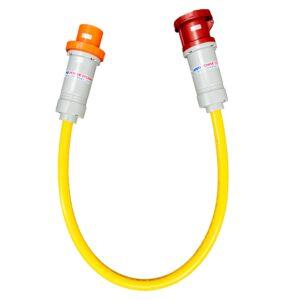
The next component is the shore power cable.
These marine-grade cables connect the yacht directly to the dock pedestal and are specifically designed to withstand:
- marine environments
- UV exposure
- moisture
- heavy electrical loads
Cable size and rating must match the yacht’s shore power requirements.
Common cable ratings include:
- 50A
- 100A
- 200A
- 400A
Improperly sized cables can overheat and create dangerous voltage drops.
Step 3: Shore Power Connectors
Different regions use different connector standards.
United States
Typically uses:
- NEMA-style connectors
- 50A 125/250V
- 100A shore power systems
Europe
Typically uses:
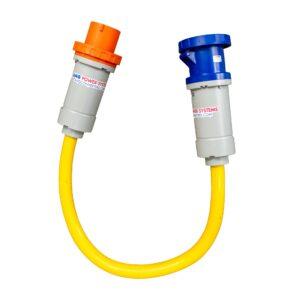
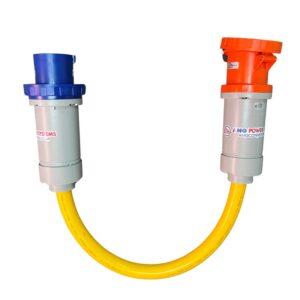
- IEC 60309 connectors
- Blue single-phase plugs
- Red three-phase plugs
Because of these differences, yachts traveling internationally often require:
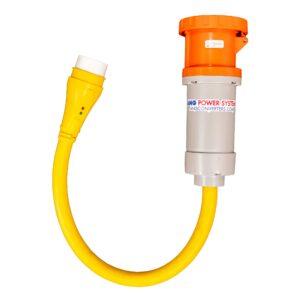
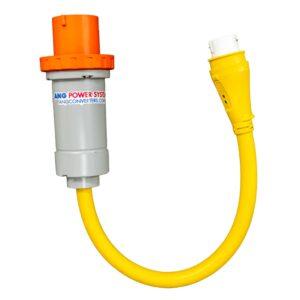
- adapters
- smart-Y systems
- shore power converters
Step 4: Smart-Y Adapters and Splitters
Some marinas may not provide the exact shore power configuration required by the yacht.
In these situations, yachts may use:
- Smart-Y adapters
- splitter systems
- dual-input adapters
These devices allow vessels to combine or adapt available dock power safely.
For example, some yachts can combine two 50A connections to simulate a 100A supply when marina infrastructure is limited.
Modern smart systems also verify proper phase alignment before connection.
Step 5: Isolation Transformer or Shore Power Converter
After entering the yacht, shore power typically passes through either:
- an isolation transformer
or - a shore power converter
Isolation Transformers
Traditional isolation transformers provide:
- galvanic isolation
- protection from marina grounding faults
- some voltage adaptation
However, they do not convert electrical frequency.
Shore Power Converters
Modern shore power converters provide significantly more functionality.
They can:
- convert voltage
- convert frequency (50 Hz ↔ 60 Hz)
- stabilize unstable marina power
- provide galvanic isolation
- protect sensitive onboard systems
Converters allow yachts to safely connect to shore power almost anywhere in the world.
For globally traveling yachts, converters have increasingly become the preferred solution.
Step 6: Main Shore Power Breaker
Once onboard power is conditioned and stabilized, it passes through the yacht’s main shore power breaker.
This breaker protects the yacht against:
- overloads
- short circuits
- dangerous fault conditions
The breaker also allows crew members to disconnect shore power safely during connection or maintenance procedures.
Step 7: Onboard Electrical Distribution Panel
After passing through the main breaker, electricity reaches the yacht’s main electrical distribution panel.
This panel distributes power throughout the vessel to individual systems such as:
- HVAC systems
- battery chargers
- galley appliances
- lighting circuits
- entertainment systems
- pumps and water systems
Modern yachts often include sophisticated monitoring systems that display:
- voltage
- amperage
- frequency
- power consumption
- fault conditions
Step 8: Battery Chargers and Inverters
Most modern yachts also integrate:
- battery charging systems
- inverter systems
- energy management systems
These systems maintain onboard batteries and allow seamless transition between:
- shore power
- generator power
- inverter operation
Common Shore Power Problems
Yachts frequently encounter shore power issues such as:
- low voltage
- incorrect frequency
- reverse polarity
- unstable marina power
- overloaded pedestals
- grounding problems
Without proper protection, these conditions can damage:
- compressors
- motors
- electronics
- battery systems
This is why proper shore power management is critical.
Why Proper Shore Power Design Matters
A properly designed shore power system improves:
- electrical safety
- equipment reliability
- operational flexibility
- global marina compatibility
As yachts become increasingly dependent on advanced electrical systems, shore power infrastructure has become one of the most important components onboard.
Final Thoughts
The shore power system on a yacht is much more than simply plugging into the dock. From the marina pedestal to the onboard electrical panel, every component plays an important role in ensuring safe, reliable, and efficient power distribution.
Understanding how the complete system works helps yacht owners and captains make informed decisions about upgrades, international compatibility, and onboard electrical protection.
If you are evaluating your yacht’s shore power system, planning international cruising, or considering a converter upgrade, ANG Converters’ Marine Power Systems Specialists are always available to assist with consultation and technical guidance tailored to your vessel’s specific requirements.
